OMER NIAZULLAH ← All books
Get the book
Fourteen centuries before psychology gave it a name, the Prophet ﷺ was already teaching it.

Learn Emotional Intelligence from the Life of the Prophet (pbuh)

A practical guide for teachers, leaders, parents, spouses, traders, students, young adults, and callers to Allah

Self-awareness, self-regulation, empathy and social skill, traced through verified hadith and the lived example of the Prophet ﷺ and his companions, then turned into practice for the roles you live every day.
Get the ebook — $3.99 Look inside
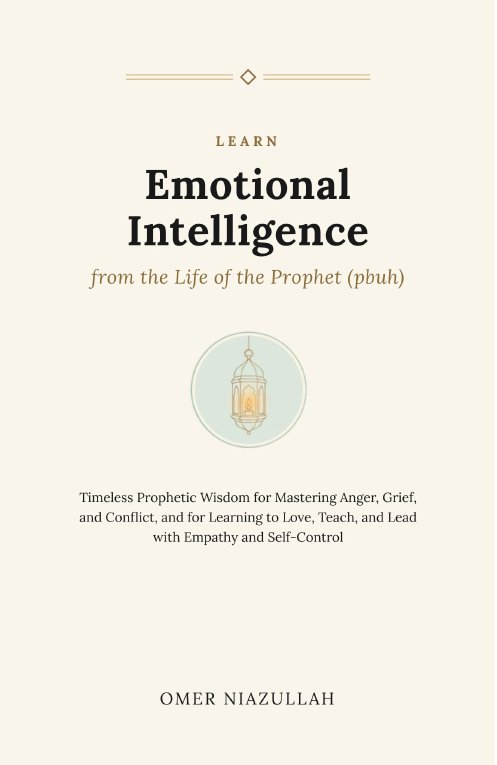
Learn Emotional Intelligence from the Life of the Prophet, book cover
WHY THIS BOOK MATTERS

Hilm is not the absence of feeling. It is what you do in the half second before you act on it.

A father snaps over a spilled cup. A teacher replays a colleague's comment all evening. A young professional says yes again when she means no. None of them lack intelligence or good intentions; what they lack in that moment is a skill. The Arabic tradition has a precise word for its core, hilm: forbearance that is chosen, not merely felt. This book shows how the Prophet ﷺ lived it at Ta'if, at Hudaybiyyah, with a Bedouin in the mosque, and in his own home, and how you can build it through practice.

Verified, not romanticised Every hadith checked against its collection and reference number, with disputed narrations clearly identified.
Applied to your role "In Practice" sections for the teacher, parent, spouse, leader, trader, student and da'i in every chapter.
Built for practice A Key Takeaway and a written My Reflection after each chapter, plus a full self-assessment to retake over time.
INSIDE THE BOOK

Five parts, twenty-three chapters

PART IHilm: The Foundations of Self-RegulationAnger and the Ta'if narrative, knowing your triggers, silence as strength, and sabr as emotional endurance.
PART IIListening and Understanding OthersActive listening, reading what isn't said, empathy at Hudaybiyyah, listening in marriage, and attunement in parenting.
PART IIIConflict and Difficult ConversationsThe Black Stone dispute, naseeha done right, forgiveness at the Conquest of Makkah, and the fiqh of sulh.
PART IVBoundaries, Voice, and InfluenceSetting boundaries, persuasion and da'wah, leading with EQ, and prophetic ethics in the marketplace.
PART VSustaining ItEQ across cultures, scholars on emotional mastery, leaving what does not concern you, and a daily practice of hilm.
PLUSSelf-assessment and back matterA full emotional intelligence self-assessment, note on method, glossary of Arabic terms, and references.

Every chapter moves from story to practice
1A realistic modern scene from a classroom, a home, or a workplace
2A verified hadith or Qur'anic passage at the heart of the chapter
3The emotional intelligence principle inside it, unpacked
4In Practice for each role the material reaches
5Key Takeaway and My Reflection, with space to write
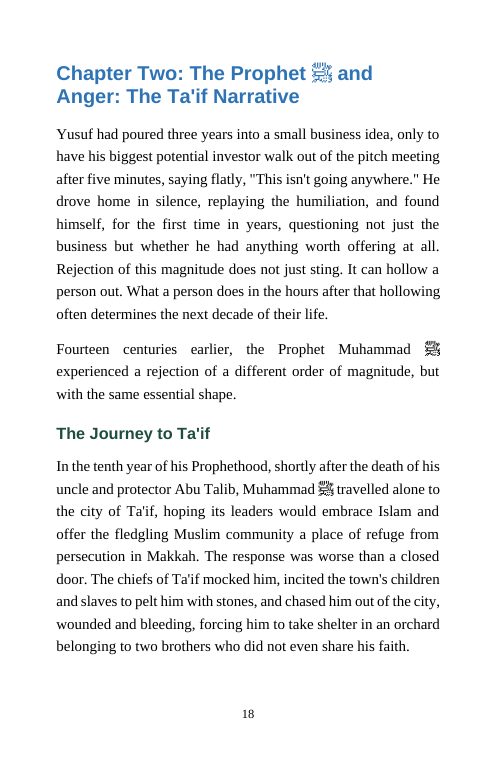
Opening page of Chapter 2, The Prophet and Anger: The Ta'if Narrative Chapter 2: the Ta'if narrative
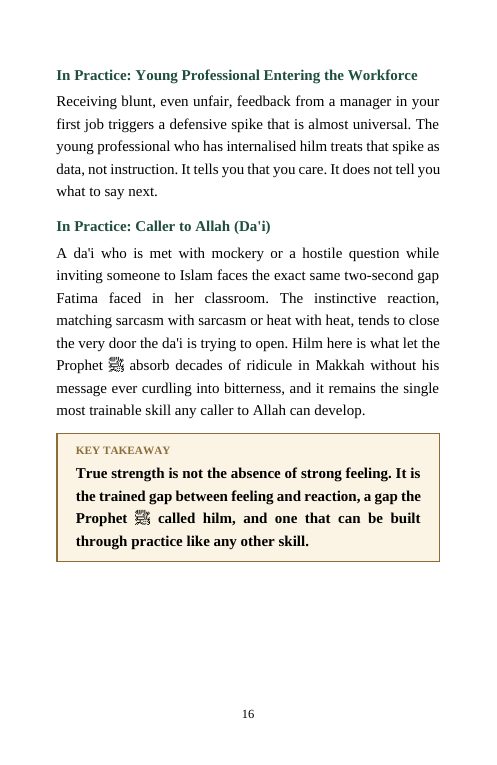
In Practice sections and a Key Takeaway box In Practice and Key Takeaway
"True strength is not the absence of strong feeling. It is the trained gap between feeling and reaction, a gap the Prophet ﷺ called hilm." Key Takeaway, Chapter 1
Learn Emotional Intelligence from the Life of the Prophet (pbuh) 23 chapters · Kindle ebook · read on any phone, tablet or Kindle $3.99
Get the book Secure checkout · card or PayPal
Give it as a gift For a new teacher, a newly married couple, or a young adult starting out. On Amazon, choose “Buy for others” and enter their email. Send as a gift →
Staff training & study circle licence — $49 Use the book across a school's staff development, a leadership team, or a halaqa, with the self-assessment for every participant. Ask about the licence →
[Your photo]
About the author

Omer Niazullah is an Arabic Language and Islamic Studies educator with over two decades of international teaching experience, including multiple roles as Head of Department. Born in Al-Madinah and a graduate of the Islamic University of Madinah, he writes from a conviction that authentic scholarship and practical, everyday application belong together, not in separate rooms.